An Unexpected SSA Call? Verify The Contact First
An unexpected call about your disability claim can be difficult to judge. Pause, find an official contact route independently, and keep a clear note of what you actually confirm.
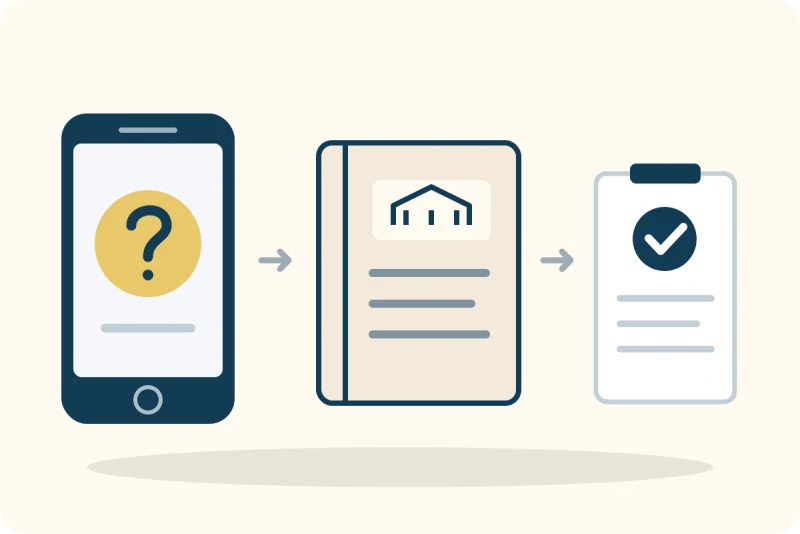 AI-assisted editorial illustration.
Check Through A Separate Contact Route
Use the private note to distinguish what an unexpected caller claimed from what an official office confirms.
Use The Verification NoteA Real Claim Can Lead To A Real Call
An unfamiliar number does not, by itself, tell you whether a call is genuine. SSA says its employees may call people who recently applied for benefits, need to update an existing payment record, or requested a call. See SSA’s explanation of when employees call.
That matters when you are waiting for a disability decision. You need a way to check an unexpected contact without deciding that every call is fraudulent or that every caller who mentions your claim is legitimate.
Look At The Request, Not Just The Name
According to SSA, its employees will not threaten arrest, suspend your Social Security number, or demand immediate payment. A demand for gift cards, cryptocurrency or a wire transfer is a warning sign. A familiar agency name does not make that demand safe.
SSA’s scam guidance also warns that imposters can imitate government phone numbers, use real employees’ names, and send official-looking documents. Do not use the number displayed on your screen, a badge image, or details the caller already knows about you as proof of identity.
If the contact is suspicious, end the call or stop responding. Do not open its links or attachments, send money, or continue sharing personal information while trying to establish whether it is real.
Start A Separate Call Through An Official Route
The Federal Trade Commission recommends hanging up and calling the agency directly at a number you know is correct when you think a contact might be real. Do not simply press redial or use a callback number supplied in the questionable message.
Open SSA’s official phone-contact page yourself. It lists the national number, 1-800-772-1213, and links to its office locator for local numbers. For people who are deaf or hard of hearing and use TTY equipment, the listed number is 1-800-325-0778. Check the current page for service hours.
On that separate call, explain the contact you received and ask how to verify the request. For example: “I received a message saying someone needs information for my pending disability claim. How can I check that request and the correct way to respond?” This is a suggested question, not an agency script or a promise that the person answering can resolve every issue.
If the message names an examiner, office or appointment provider, ask the official contact how to reach the appropriate office. Avoid assuming that one office can confirm every outside appointment or message.
Use A Private Verification Note
Print these optional prompts. Keep the message’s claims separate from what you learn through the official route. This original note is not an SSA form, a fraud report or a verified identity check.
- When And How The Contact Arrived: ____________________
- What The Sender Claimed Or Requested: ____________________
- Official Page I Used To Find A Contact: ____________________
- Office I Reached And Date: ____________________
- What Was Confirmed, Or Still Unclear: ____________________
- Next Step For The Actual Claim: ____________________
Use short descriptions such as “request for a record.” Keep Social Security numbers, banking details, passwords and medical documents out of this worksheet and this website’s chat. Complete the note privately; do not send it to Glassman to authenticate a caller.
Keep Claim Follow-Up And Scam Reporting Separate
A suspicious message may leave you with two different tasks: checking whether your claim needs attention and reporting the suspicious contact. SSA directs people to its scam page and Office of the Inspector General reporting route. Reporting a scam is not a response to a genuine request for evidence.
Keep any known appointment or written response date visible while you verify the contact. Do not assume a verification call changes those instructions. If a deadline or appointment is approaching, raise that specific concern with the office handling the request.
Once you have verified the request, our document-submission checklist can help organize a response. For an ordinary progress question, use the application-status guide.
Sources And Scope
Sources checked October 20, 2026: SSA’s Telephone-Contact FAQ; SSA Scam Guidance; SSA Phone Contacts; FTC Government-Impersonation Guidance.
Prepared with AI assistance and checked against the linked official sources; no attorney review is claimed. General information, not individual legal advice or a determination that a specific contact is genuine. Glassman Disability is not SSA. This page does not verify callers, submit scam reports or access your claim.
Use the printable prompts privately. This page does not collect your notes or assess eligibility. Checklist selections are not saved by this page.